
Where should a porta potty go on a job site or event lot?
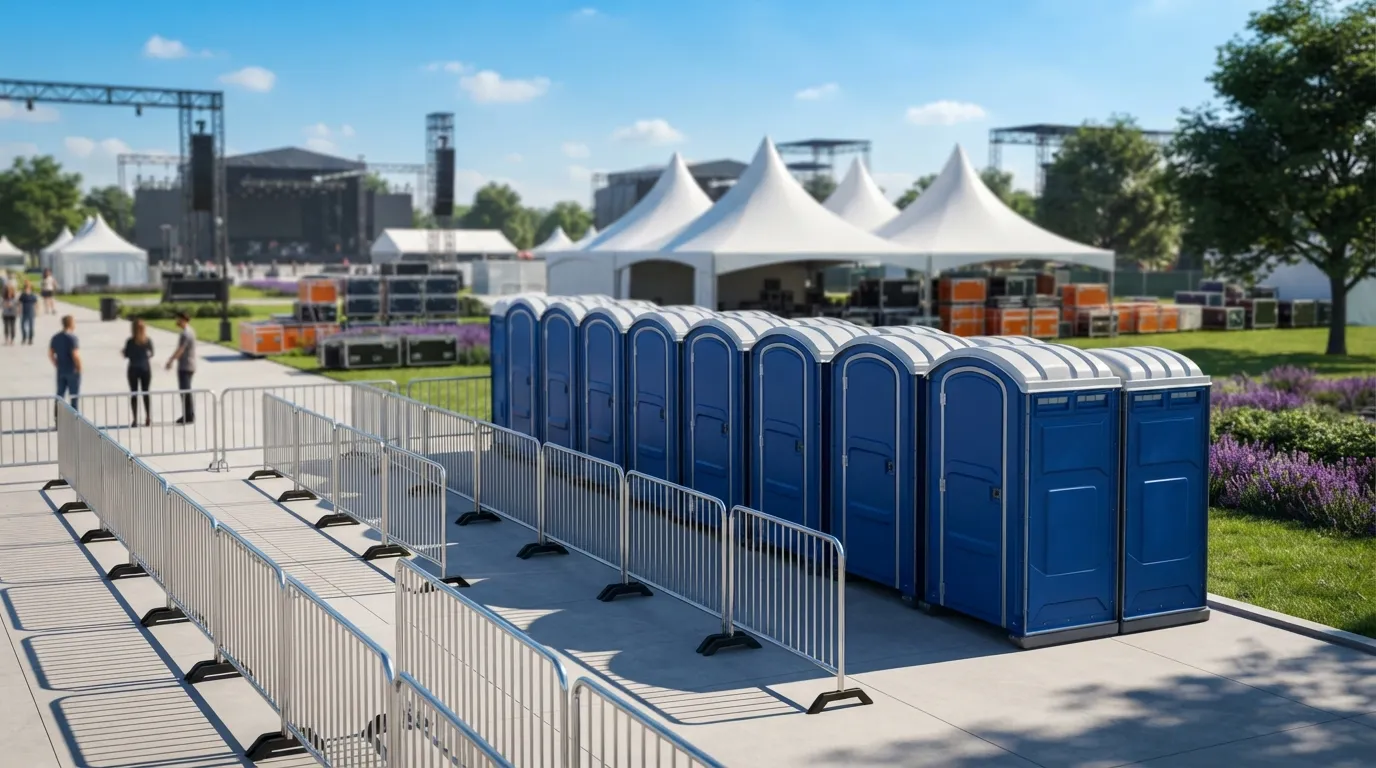
Start with firm, level ground close to where people actually work or gather, not the tidiest corner of the lot. A standard unit runs about 44 by 48 inches on the ground and stands roughly 92 inches tall, so give it a footprint plus room to open the door without hitting a fence rail or a dumpster. If you're also renting a roll-off dumpster, keep the two apart, since a delivery truck for either one needs about 60 feet of straight clearance to back in and drop safely. On a construction site, placement follows the same logic as OSHA portable toilet requirements: units need to sit close enough to the work area that workers actually use them. ADA Standards section 302.1 also matters here. It requires the ground under and around an accessible unit to be stable, firm and slip resistant, so gravel that shifts underfoot won't pass. For events near Carol City, check our event restroom rental guide and our porta potty rental checklist before you finalize a layout.
Do porta potties need a permit for placement in Carol City?
Placement in a yard or private lot generally doesn't need city sign-off, but putting a unit, dumpster, or fence panel in the street, sidewalk or right-of-way is a different question, and that one needs confirming with the city before delivery day. Dumpster placement permit cost and rules vary block by block in Miami-Dade cities, and we've seen jobs stall because nobody checked before the truck showed up. If your project sits on a public easement or a road shoulder, call Carol City's permitting office directly, and read our dumpster permit requirements and porta potty permit requirements pages first so you know what to ask. The same caution applies to temporary fence rental panels set along a property line that touches a public walkway. When in doubt, request a quote through Carol City Porta Pros and we'll flag anything that looks like a right-of-way question before we schedule delivery.
How many porta potties does a site need and where do they go?
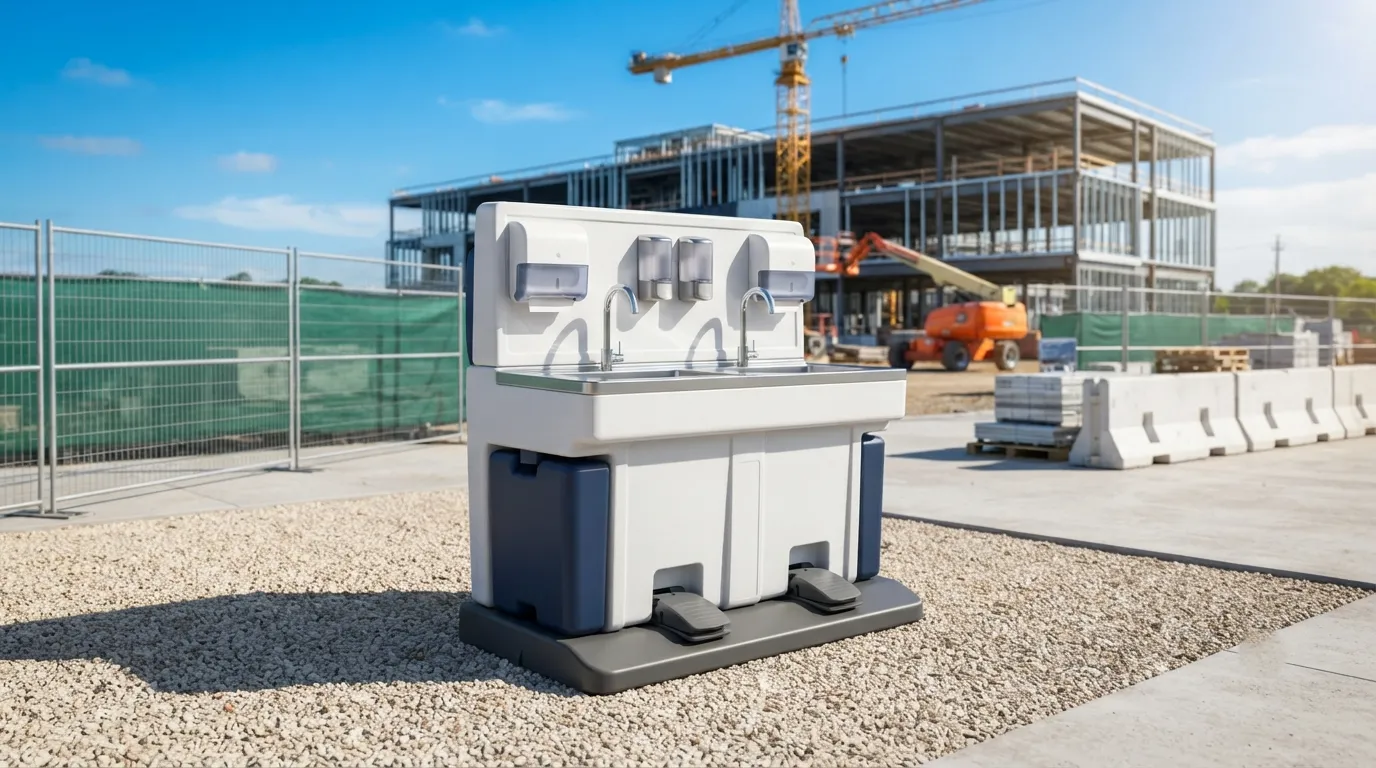
Worker count decides both the number of units and where they sit. OSHA 1926.51(c)(1) sets the ratio: one toilet facility for 20 workers or fewer, one toilet seat and one urinal per 40 workers once you pass 20, and one per 50 once you hit 200 or more. Spread that count across the site instead of clustering it at one gate, especially on a spread-out lot. If any workers are applying paints, coatings, herbicides or insecticides, OSHA 1926.51(f)(1) requires washing facilities near that work, separate from the general toilet count, and a handwashing station rental placed at the mixing area covers that. For accessible units, ADA Standards section 213.2 requires at least 5 percent of a cluster to be accessible, never fewer than one, and that unit needs a 60 inch turning circle under section 304.3.1, plus a 32 inch clear door opening under section 404.2.3. Our how many porta potties do I need page walks through the math for your headcount, and ADA restroom requirements covers the accessible unit specifics in more depth.
Can placement affect service and pickup?
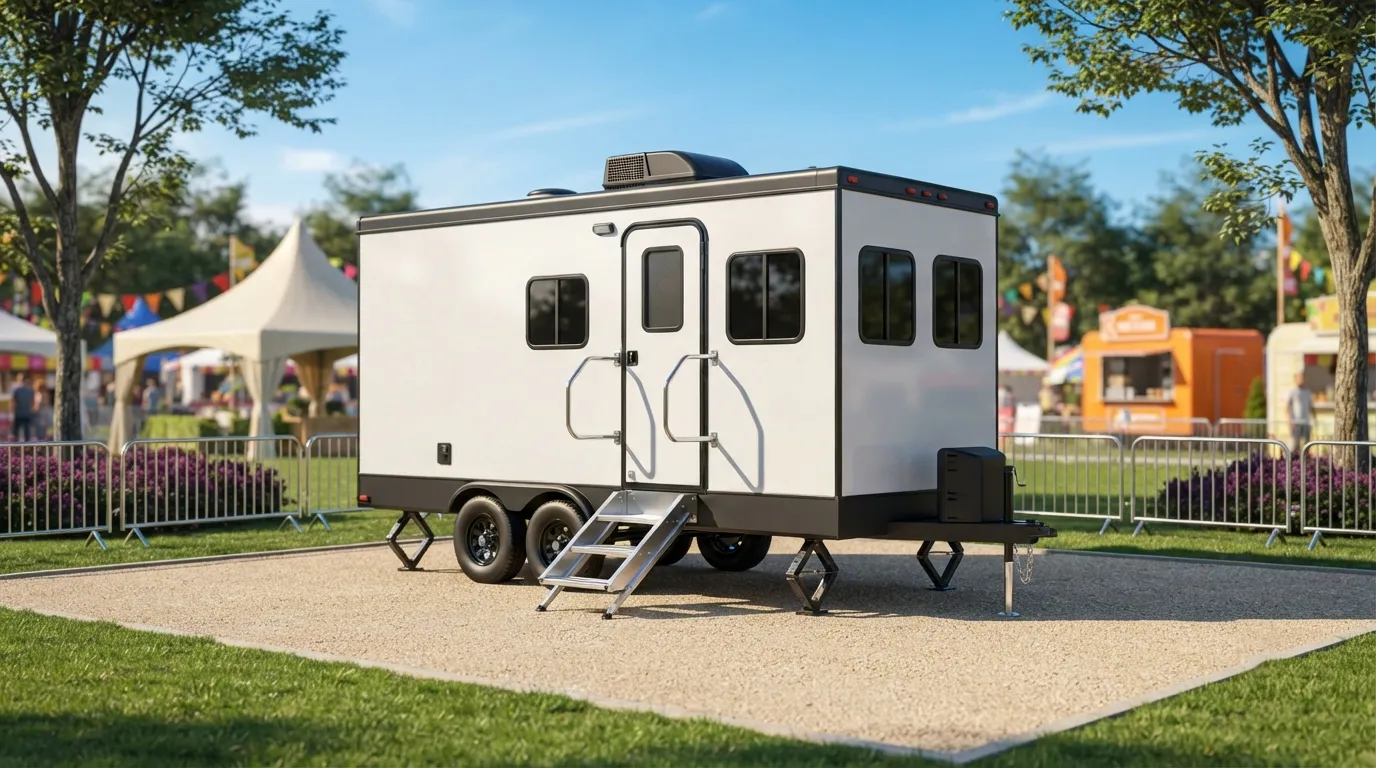
Yes, and this is where most placement mistakes actually cost money. ANSI/PSAI Z4.3 sets a baseline service interval of once a week for up to 10 users over a 40 hour week, but the truck still has to reach the unit on that schedule. A unit tucked behind a locked gate or parked equipment gets missed, and a missed service call on a Carol City job site means calling for emergency porta potty rental service to catch up. The same clearance rule applies to a restroom trailer rental, which needs a stable pad and enough backing room for a larger truck. If your site also runs a storage container rental or a mobile office trailer, keep their loading paths separate from the toilet service lane. Even something as small as an Ozark River portable sink replacement parts order shouldn't require moving the unit itself. Placement decisions echo into other services too. A property using septic pumping service instead of, or alongside, portable units needs truck access for the pump hose, similar to how a Placerville septic pumping service crew would stage on a rural lot. A typical 1,000 gallon residential tank gets pumped every 3 to 5 years, per our how often to pump a septic tank guide, so plan access for that truck now rather than later.
Where in Carol City does delivery clearance matter most?
Tight infill lots and older commercial strips in Carol City are where clearance gets missed most often. Opa-locka sits 3.5 miles south and shares similar lot patterns, so if you've rented there before, the same setback rules apply here.
What if my Carol City site has no flat ground?
Ask about leveling boards or a gravel pad before delivery day. ADA Standards section 302.1 requires stable, firm, slip resistant ground for accessible units, and our crew can recommend a fix on the walkthrough.
Do I need a permit to place a dumpster on the street in Carol City?
Possibly, and it isn't verified in this guide, so confirm with the city before delivery. See dumpster permit requirements for what to ask when you call.
How far apart should porta potties be placed on a large site?
Spread them across work zones instead of one cluster, following the worker ratios in OSHA 1926.51(c)(1). Our [porta potty placement guide] checklist and the construction site services page both cover multi-zone layouts.
Can I move a rented unit after delivery?
Don't move it yourself; call Carol City Porta Pros first. Moving a unit off its pad can affect the next scheduled service and may require a return trip.
Next step
Get a delivery date
Tell us the address, the dates and the headcount. We size the order and confirm the route.