
How many restrooms does a county fair need?
Fair crowds are not steady. They spike at gate opening, after judging events, and before headline entertainment. A flat "one unit per X people" rule misses those surges, so we plan around the busiest hour of the busiest day, not the daily average. That's the same logic behind our porta potty placement guide and our how many porta potties do I need breakdown, both worth a look before you lock a layout.
For a fair with midway rides, livestock barns, and a grandstand, we usually split standard units across three zones rather than clustering them near one gate. That cuts walk time and keeps lines from forming near food vendors. Standard porta potty rental units run 44 by 48 inches on the ground and about 92 inches tall, so they fit tight spots between vendor rows without eating usable footage. Each carries a 60 to 70 gallon holding tank, which matters when service trucks can only reach certain access roads during fair hours.
ADA compliance isn't optional. Under ADA Standards section 213.2, where single-user portable units are clustered, at least 5 percent must be accessible, with a minimum of one no matter how small the cluster. Our ADA accessible porta potty units meet the 60 inch turning circle required by section 304.3.1 and the 32 inch clear door opening in section 404.2.3. If your fair grounds include a paved midway, a temporary fence rental can also help route foot traffic toward the right restroom cluster instead of the nearest porta potty regardless of accessibility.
What restrooms fit a fairground layout?
Livestock barns, food courts, and grandstands each need a different setup, and mixing unit types is normal for a fair this size. Barn areas near animal handling get rugged standard porta potty rental units, since they take heavier use and occasional hose-down cleaning. Grandstand and main gate areas often call for a deluxe flushable porta potty or two, since fair boards like offering a nicer option near VIP seating without renting a full restroom trailer rental.
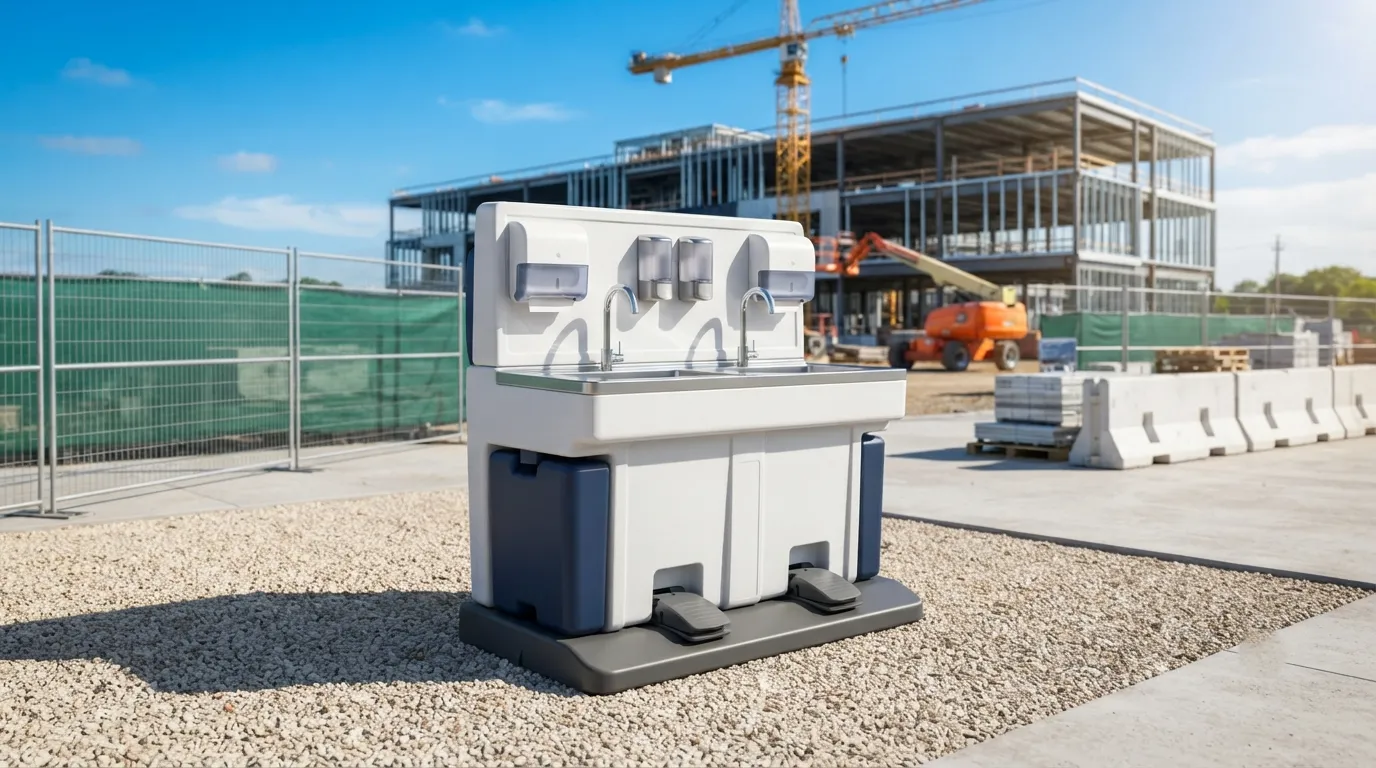
If your fair runs a beer garden, wine tent, or a fried-food row with fryers and degreasers, handwashing needs specific attention. OSHA 1926.51(f)(1) requires washing facilities where workers handle contaminants like coatings, herbicides, or insecticides, but food vendor staff and general fairgoers fall under the broader sanitation expectation in OSHA 1926.51(c). Either way, a handwashing station rental near food booths keeps staff and guests covered, and stations must be stocked with soap and towels per 29 CFR 1910.141(d)(2). Sanitizer alone does not satisfy that standard, which surprises a lot of first-time fair organizers.
For fairs expecting several thousand daily visitors, we sometimes recommend a 4 stall restroom trailer or 8 stall restroom trailer near the main grandstand, paired with standard units spread through the vendor rows. Roll-off needs are common too. Food vendors and demolition of temporary structures after the fair often call for a roll-off dumpster rental, and a 10 yard dumpster rental usually handles vendor debris for a weekend fair without blocking access roads.
What does county fair restroom rental cost in Carol City?
Costs scale with unit mix and rental length, not just headcount. A standard unit priced for a multi-day event typically runs in the range shown below, and ADA and deluxe units cost more per unit but reduce complaints and line backups near grandstands.
| Unit | Duration | Typical Range |
|---|---|---|
| Standard | Event (multi-day) | $200 to $800 |
| ADA accessible | Weekend | $199 to $300 |
| Deluxe flushable | Weekend | $150 to $290 |
| Delivery fee | Weekend | $125 to $540 |
Delivery fees vary by how far trucks travel and how many trips the fairground access roads allow in a single day. Carol City sits close to several communities we already service. Opa-locka is 3.5 miles south, Golden Glades is 5.0 miles southeast, and Miami Lakes is 6.6 miles southwest, so fairgrounds in any of those spots fall inside a short drive for our trucks. For a full cost breakdown across unit types, see our porta potty rental cost page or the restroom trailer rental cost guide if you're weighing trailers against standard units.
How far in advance should we book fair restrooms?
Book as soon as your fair dates and vendor count are set, ideally weeks ahead. Fair weekends compete with weddings and festivals for the same trailers and ADA units. Waiting until the final week limits your options to whatever standard units remain. Early booking also gives us time to plan delivery routes around fairground access restrictions.
Do we need a permit for portable restrooms at a fairground?
Placement in public right of way or on municipal fairground property needs confirming with the city. We have not verified a specific Carol City ordinance for fair restroom placement, so check with the fairground operator or city permitting office before finalizing your layout. Our porta potty permit requirements page explains the general process.
How often are restrooms serviced during a multi-day fair?
Multi-day fairs typically get daily servicing, sometimes twice daily near high-traffic zones like the grandstand or food court. The baseline industry interval under ANSI/PSAI Z4.3 is one service visit weekly for lighter use, but fair-level traffic demands far more frequent attention. See how often are porta potties cleaned for details on service scheduling.
Can we add handwashing stations near food vendors only?
Yes. Handwashing stations can be placed selectively near food booths, beer gardens, or petting zoo exits rather than across the whole fairground. This keeps costs down while still meeting sanitation expectations where hands actually need washing. Ask about our portable sink rental option if vendors need a self-contained unit.
What happens if we underestimate restroom count mid-fair?
Call us. We keep standard units in reserve and can often deliver additional restrooms same-day or next-day during a multi-day fair, depending on fairground access and remaining stock. It's cheaper to overestimate slightly at booking than to scramble on day two of a three-day fair.
Next step
Get a delivery date
Tell us the address, the dates and the headcount. We size the order and confirm the route.